High-Volume Printing Solutions
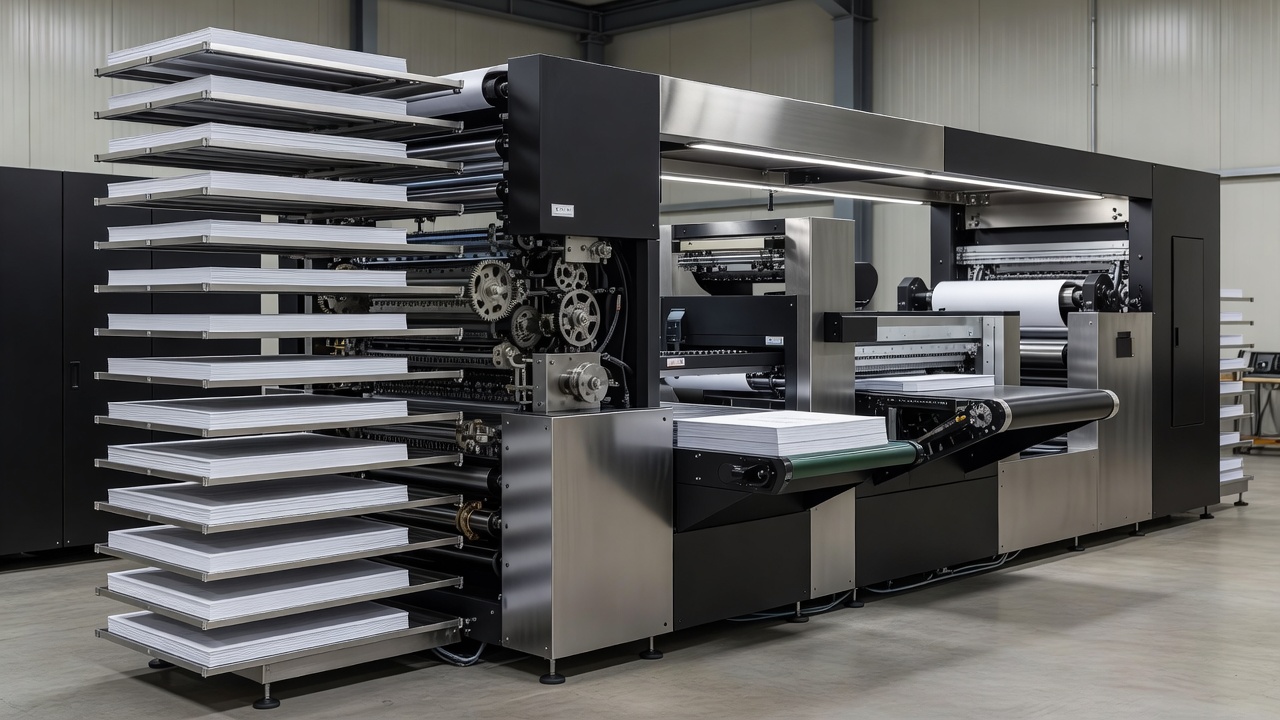
When operational output exceeds standard office requirements, transitioning to high-volume printing infrastructure becomes a logistical necessity. Enterprise environments, educational institutions, and specialized fulfillment centers operate on scales where standard consumer or small-business hardware quickly fails due to mechanical exhaustion and prohibitive per-page costs. Implementing high-volume solutions requires a deep understanding of duty cycles, modular finishing capabilities, and fleet management architectures.
Understanding Duty Cycles and Hardware Stress
The defining metric for any high-volume machine is its duty cycle. Manufacturers typically provide two numbers: the maximum monthly duty cycle and the recommended monthly print volume (RMPV). The maximum duty cycle represents the absolute peak physical stress the device can endure in a single month without immediate catastrophic failure. Relying on this number for daily operations is a critical procurement error.
The RMPV is the crucial figure. It dictates the sustainable output the machine is engineered to handle over its multi-year lifespan while maintaining print quality and avoiding excessive maintenance interventions. High-volume solutions feature reinforced paper paths, heavy-duty fuser assemblies, and larger cooling mechanisms designed specifically to operate continuously within this recommended range, often spanning tens of thousands of pages per month.
Automated Finishing and Modular Expansion
In high-volume scenarios, the printing process is only a fraction of document generation. The labor cost associated with manual sorting, stapling, and hole-punching thousands of pages quickly outstrips the cost of the hardware itself. Enterprise-class printers are highly modular, allowing organizations to attach robust finishing units to the core print engine.
These finishing modules can automate complex tasks without human intervention. Features commonly deployed include multi-position stapling, automated hole punching (matched to specific binder standards), saddle-stitching for booklet creation, and advanced mechanical collators that physically offset print jobs in the output tray for easy separation. By integrating these processes, large organizations streamline the production of training manuals, promotional materials, and complex client reports.
Input Capacity and Media Versatility
Continuity is the primary objective of a high-volume setup. An enterprise printer that pauses every hour because it ran out of paper introduces unacceptable bottlenecks. Therefore, high-volume hardware relies on extensive input architectures. While standard printers may hold 250 sheets, enterprise solutions feature high-capacity tandem trays capable of holding entire cases of paper (often 3,000 to 5,000 sheets).
Furthermore, these machines possess multiple discrete trays to handle various media types simultaneously. A single machine can instantly switch between letterhead, heavy cardstock, standard bond paper, and envelopes without requiring a user to manually swap paper stocks. Advanced paper handling sensors detect thickness and adjust fuser temperatures dynamically to ensure proper toner adhesion across diverse media profiles.
Fleet Management and Cost Control
High-volume printing is rarely isolated to a single machine; it usually involves a fleet of distributed devices. Managing this ecosystem requires sophisticated administrative software. Fleet management platforms allow IT departments to monitor toner levels, predict maintenance requirements before parts fail, and audit departmental usage.
From a cost control perspective, high-volume environments rely heavily on Managed Print Services (MPS) contracts. Instead of purchasing hardware and consumables outright, an organization pays a fixed cost per page, which covers the hardware lease, automated supply replenishment, and all break-fix maintenance. This model shifts printing from an unpredictable capital expenditure to a predictable operational expense, heavily incentivizing the deployment of highly reliable, high-yield infrastructure.
Conclusion
Scaling up to high-volume printing is a strategic architectural decision. It moves away from evaluating printers purely on print speed and focuses deeply on mechanical endurance, post-print automation, and centralized management. By aligning the hardware's recommended duty cycle with actual organizational output and implementing proper fleet oversight, enterprises can eliminate workflow bottlenecks and achieve drastic reductions in total document production costs.