Laser vs. Inkjet Printers: A Structural Comparison
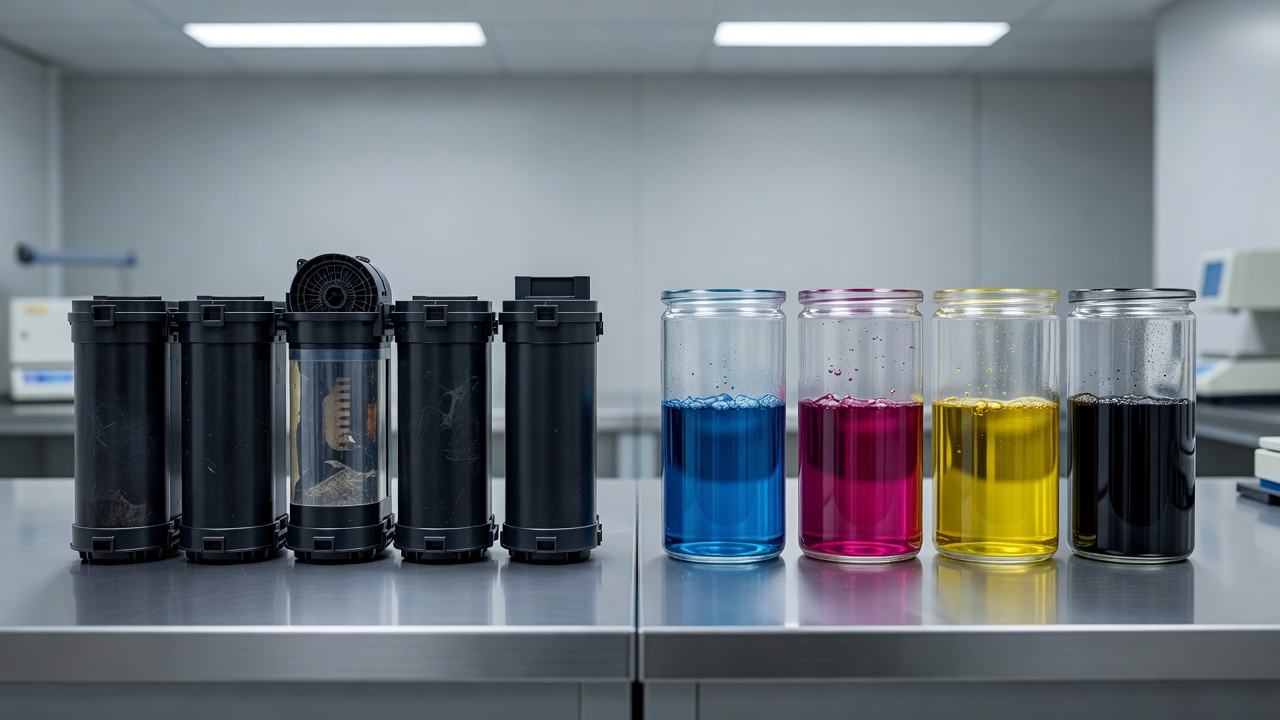
The decision between laser and inkjet printing technology remains the foundational choice when establishing any document output environment. Despite significant advancements in both categories over the past decade, the underlying mechanical principles dictate their respective strengths, optimal use cases, and long-term financial implications. Understanding these structural differences is critical to avoiding mismatched hardware deployments that result in operational bottlenecks or excessive consumable expenses.
Mechanical Foundations
At the core of the divergence is the medium of transfer. Inkjet printers operate through the precise propulsion of microscopic droplets of liquid ink onto paper. Using either thermal or piezoelectric mechanisms, printheads traverse the page laterally, depositing ink line by line. This process requires highly engineered nozzles that can deposit exact volumes of liquid to create complex color gradients and sharp text, though it introduces variables related to liquid absorption into the paper substrate.
Conversely, laser printers utilize a xerographic printing process. A laser beam projects an electrostatic image onto a rotating, electrically charged photoreceptor drum. Dry toner powder, containing plastic and pigment particles, is attracted to the charged areas of the drum. The toner is then transferred to the paper and permanently bonded by passing through a fuser unit—a pair of heated rollers that melt the plastic particles into the paper fibers. This electrostatic method allows for the rapid rendering of entire pages rather than incremental line-by-line printing.
Output Quality and Substrate Interaction
The physical nature of liquid ink versus dry toner fundamentally alters how each machine interacts with various media types. Because inkjet technology relies on liquid ink, the porosity of the paper significantly affects the final image. On standard copy paper, ink can wick along the paper fibers, slightly blurring the edges of crisp text—a phenomenon known as feathering. However, when paired with specialized coated photo papers that control dot gain, inkjets produce superior, continuous-tone imagery with a wider color gamut and deeper contrasts than laser counterparts.
Laser printers excel in rendering razor-sharp text and precise vector graphics, regardless of the paper quality. Because the toner rests on the surface of the paper and is fused into place with heat, it does not suffer from feathering. The resulting prints are immediately dry to the touch, highly resistant to smudging from highlighters, and generally more resilient to moisture. However, because toner cannot blend as seamlessly as liquid ink, photographic reproduction on laser printers typically displays visible halftone patterns, making them less suitable for fine art or high-end photographic printing.
Total Cost of Ownership (TCO) and Duty Cycles
Initial acquisition costs often heavily favor entry-level inkjet models. Manufacturers frequently subsidize the hardware cost, relying on the ongoing sale of high-margin ink cartridges. Over time, the cost per page (CPP) for traditional cartridge-based inkjets can become prohibitively high in environments with moderate to heavy printing demands. Furthermore, inkjets require regular use to prevent the liquid ink from drying and clogging the microscopic printhead nozzles. If a printhead requires extensive cleaning cycles, a substantial volume of expensive ink is purged into a maintenance tank, effectively wasted.
Laser printers necessitate a higher initial capital expenditure. The internal components—including the drum unit, fuser, and transfer belt—are robust and engineered for longevity. Toner cartridges, while expensive to purchase upfront, yield significantly more pages than standard ink cartridges, resulting in a substantially lower CPP for monochrome and standard business color documents. Furthermore, because toner is a dry powder, it does not dry out or clog over periods of inactivity. A laser printer can sit dormant for months and produce a perfect print immediately upon activation.
Operational Speeds and Workflow
Workflow efficiency is heavily dependent on print speed and time-to-first-page (TTFP). Because laser printers image an entire page onto the drum before transfer, their continuous printing speeds are exceptionally high, making them ideal for long, multi-page text documents. They are designed for substantial duty cycles, meaning they can output thousands of pages per month without accelerating hardware degradation.
Modern business-class inkjets have closed the speed gap significantly, employing page-wide printheads that remain stationary while the paper moves beneath them. These specialized inkjets can rival or even exceed the speed of traditional laser printers. However, for standard, consumer-grade models with moving printheads, the mechanical limitations of lateral carriage movement restrict overall output speed.
Strategic Deployment Recommendations
Selection must be driven by operational reality rather than initial sticker price. Environments demanding high-volume, text-heavy output, strict document durability, and long periods of inactivity are unequivocally best served by laser technology. Conversely, workflows that prioritize high-resolution color imagery, diverse media handling (such as printing on textured cardstock or glossy photo paper), and intricate graphics require the liquid precision of inkjet technology. Calculating the projected monthly page volume and multiplying it by the manufacturer's stated CPP is the only reliable method for forecasting the true financial impact of either system.